Louis Armstrong’s Musical Legacy Beyond the Familiar Hits
Explore Louis Armstrong as trumpeter, singer and improviser. Move beyond familiar hits through early recordings, vocal phrasing and the collaborators within his musical history.
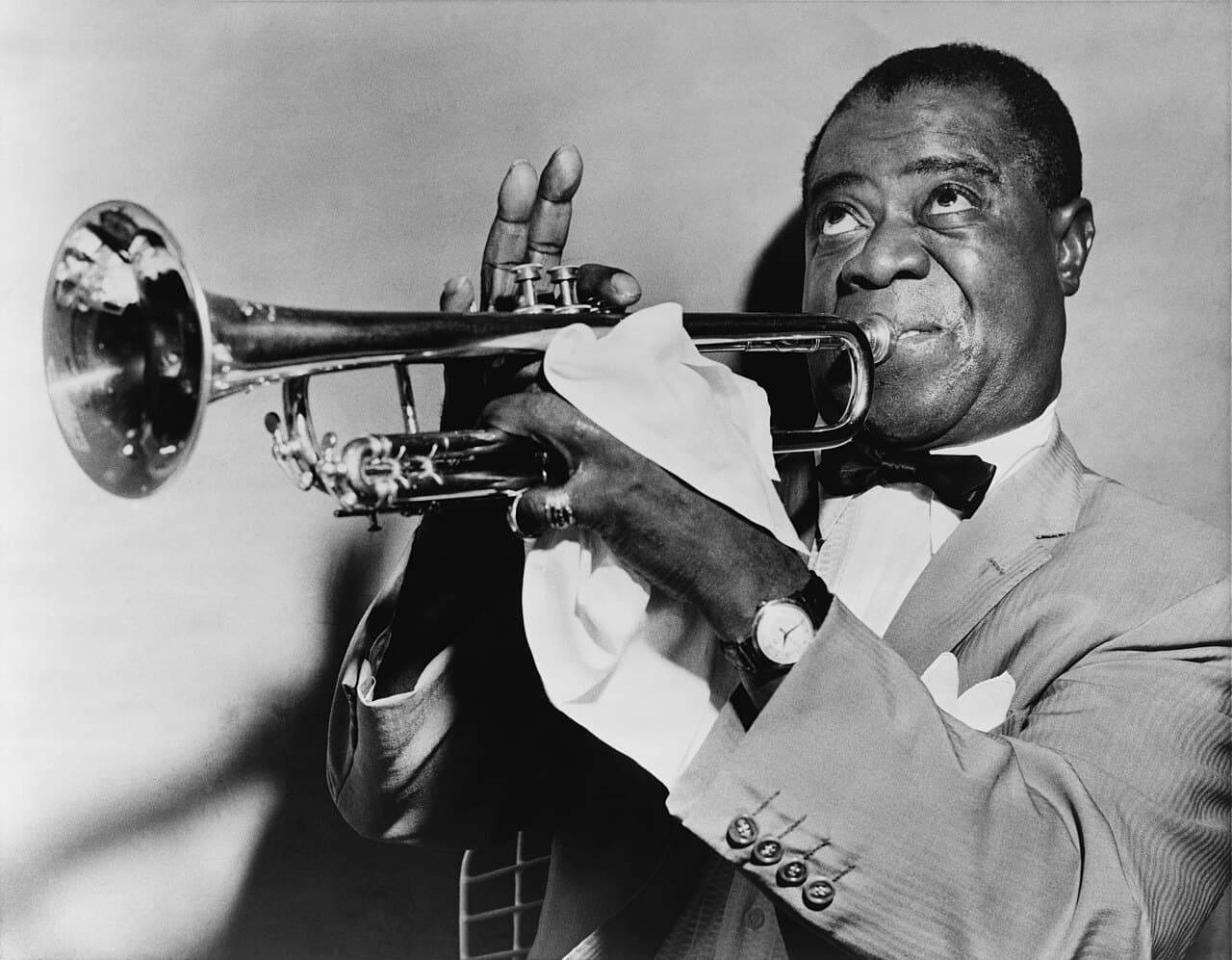
A familiar Louis Armstrong song can make his sound feel instantly recognizable. The rough-edged voice, the trumpet and the warmth of the public image form a powerful introduction. Yet recognition is only the beginning. His importance in jazz includes the role of the improvising soloist, the rhythmic freedom of his singing and a recording history shaped with other musicians. Looking beyond one beloved hit reveals a much larger musical career.
Begin in New Orleans, then follow the work
The Smithsonian's biographical material records Armstrong's birth in New Orleans in 1901 and traces his early work through several ensembles. It places him with King Oliver in Chicago in 1922 and Fletcher Henderson in New York in 1924, before his return to Chicago. The movement between groups matters because a career develops through working settings, not only through personal talent in isolation.
Use the chronology as a route into recordings and collaborators rather than a list to memorize. Each ensemble provides a different context for the sound. A listener can begin asking what is happening around the trumpet and how the arrangement creates room for an individual voice within collective music.
The soloist became a central focus
The Smithsonian describes Armstrong's influence in making the improvising soloist a focal point of jazz performance. That does not mean other musicians ceased to matter. It means an individual line could carry a particularly prominent share of the musical direction, supported by an ensemble that gives the line its setting.
Listen for the relationship between the solo and what surrounds it. Does the accompaniment hold a steady framework, answer a phrase or create contrast? The importance of the soloist becomes easier to hear when the rest of the group remains audible in your attention. A great solo is not literally music without other musical relationships.
Early recordings offer another starting point
The Hot Five and Hot Seven recordings provide a route beyond the later songs many casual listeners know first. The Louis Armstrong House Museum's discussion of Lil Hardin Armstrong places the early groups and recordings such as West End Blues within a wider collaborative history. These are not simply preliminary steps toward a later, more familiar public image.
Choose one reliable recording and listen to the complete piece. Notice how an opening establishes attention and how the ensemble develops around it. Do not judge the music only by modern recording clarity. Historical sound requires adjustment, but the phrasing and interaction can remain vivid through the limitations of the medium.
The voice belongs beside the trumpet
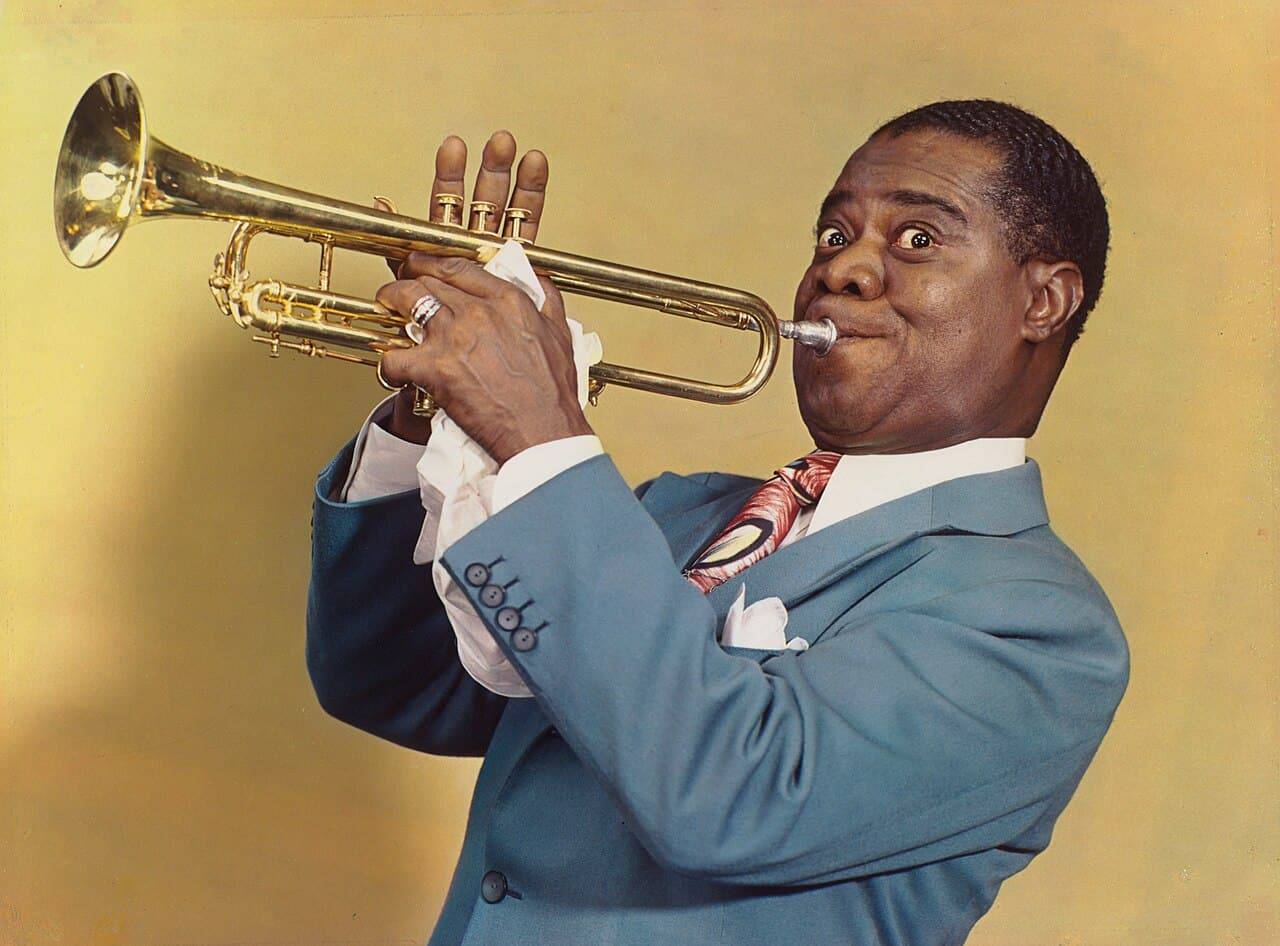
Armstrong's singing was influential in its own right. The Smithsonian emphasizes how his vocal improvisation and swinging treatment loosened more formal approaches to melody. A distinctive timbre attracts attention, but phrasing is equally important: how a line enters, stretches or changes relative to an expected tune.
To hear this, begin with a melody you know and notice where the performance differs. A lyric can remain recognizable while the timing and melodic route become personal. The singer does not have to reproduce a written line mechanically to communicate it clearly. Interpretation lives partly in the decisions made around the familiar framework.
Tone is not the whole explanation
It is easy to describe Armstrong's voice using one adjective and stop there. A rough or gravelly sound is identifiable, but it does not explain what the musician does with rhythm, emphasis and the shape of a phrase. Two singers could share a broad timbral description and produce very different performances.
Listen once for the sound and once for the movement of the line. Where is the phrase placed against the pulse? Which word or note receives attention? The distinction helps turn a famous vocal texture into an appreciation of musical work rather than treating recognizability itself as the entire achievement.
Collaborators deserve more than background status
The House Museum's account of Lil Hardin Armstrong reminds readers that the early history includes musicians whose roles can disappear beneath the most famous name. A band, a recording and a career involve contributions that should be identified through reliable credits and historical evidence. Recovering those names makes the music's context richer.
The same principle applies when exploring Armstrong's recordings with Ella Fitzgerald. Listen for interaction rather than treating a collaboration as two isolated celebrity appearances. A shared performance can make each voice more distinctive through its relationship with the other and with the accompanying musicians.
Build a small listening route
Instead of attempting the whole catalog, select a few contrasting recordings: an early ensemble performance, a trumpet-focused passage and a vocal interpretation. Use reliable discographic information to confirm dates and personnel. Listen more than once, changing the question rather than merely adding more tracks.
You might focus first on the lead line, then on the accompaniment, then on where the two meet. A short route with attention can be more revealing than a long playlist used only as background. Leave room for enjoyment; the purpose of the exercise is to hear more in the music, not to complete a qualification.
Armstrong's familiar sound is a doorway into a substantial artistic history. Follow the soloist, listen to the singer and notice the people making music around him. The public image remains recognizable, but the work behind it becomes broader, more collaborative and more rewarding to revisit.