David Bowie’s Stage Characters and the Craft of Reinvention
David Bowie’s reinventions joined music, costume, photography and performance. Explore Ziggy Stardust, Aladdin Sane and the collaborators behind some of his best-known images.
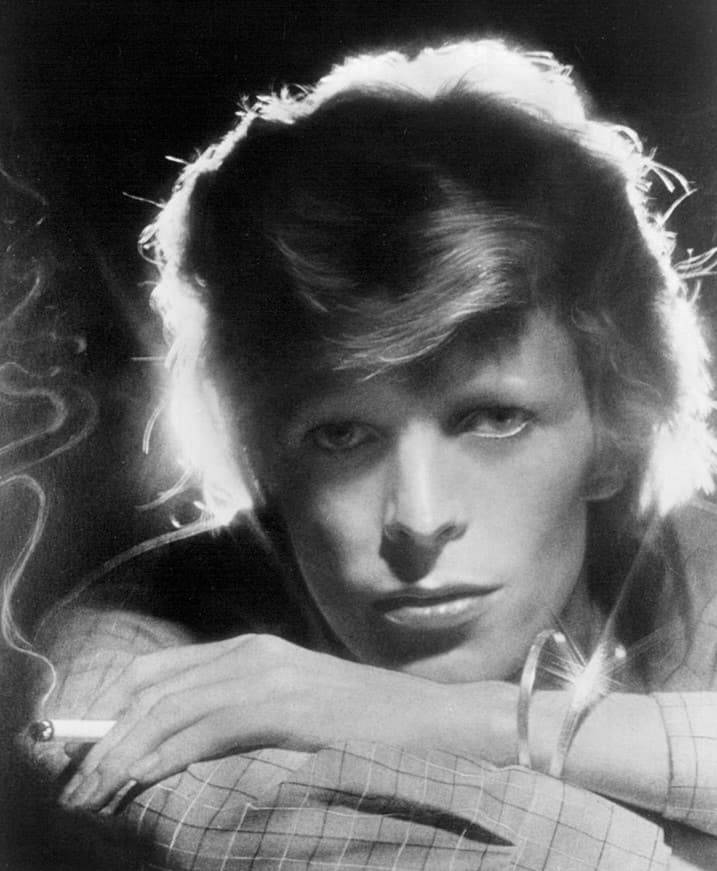
David Bowie's career is often summarized as a series of reinventions. The word is accurate enough to invite interest, but broad enough to hide the work. A new image involved more than a different haircut. Music, clothing, photography, movement and collaboration could combine into a recognizable presentation. Looking at those parts makes the changes more tangible and gives the designers and image-makers their place beside the star.
An image can carry a story before a song begins
A stage entrance or album sleeve gives an audience information before it has heard the full performance. The silhouette, pose and visual setting create expectations. Bowie's best-known images make this especially easy to notice because they are so distinct. A viewer may recognize a period through a single shape or face treatment without reading a title.
That recognition is an effect worth examining rather than a substitute for examination. Ask what you recognize: the costume, the makeup, the hairstyle or the arrangement of the photograph. Each element has its own role. Together they can create an identity more specific than a general description such as flamboyant.
Ziggy Stardust connected several visual choices
The Victoria and Albert Museum's exhibition research identifies Freddie Burretti's 1972 Ziggy Stardust bodysuits among the objects used to explore Bowie's work. A garment's shape and surface are not merely decorative additions to a song. On stage they can affect the outline of the performer and how a gesture reads from a distance.
Consider the difference between a close photograph and a view from the back of a venue. Fine detail may disappear, while silhouette and contrast remain visible. A theatrical costume operates in both situations. That helps explain why a striking design can become inseparable from the public memory of a performance period.
Aladdin Sane made the face an emblem
The V&A's account discusses the enduring red-and-blue lightning makeup associated with the Aladdin Sane sleeve and credits Pierre Laroche's role in devising the look. It also notes how fans used the sleeve as a model. The image became a reproducible signifier, recognizable beyond the original object on which it appeared.
Do not merge every familiar Bowie image into a single undifferentiated character. Ziggy Stardust and Aladdin Sane have related histories but distinct visual references. Names, dates and object credits help keep the sequence clear. The archive is useful precisely because it lets viewers move beyond a handful of repeatedly circulated pictures.
Designers helped shape what audiences saw
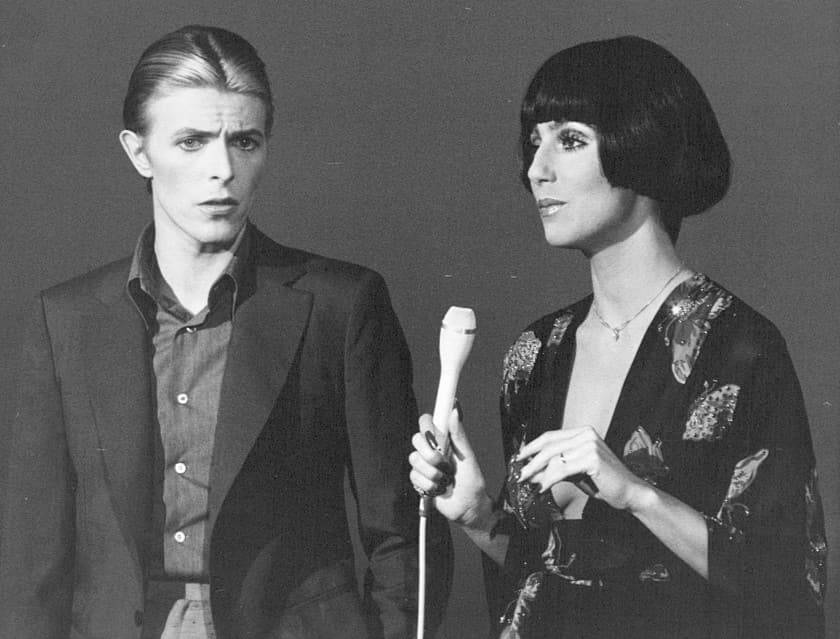
The museum's exhibition material identifies Kansai Yamamoto's creations for the 1973 Aladdin Sane tour and a later Union Jack coat made with Alexander McQueen for the 1997 Earthling cover. These examples span different moments and different collaborators. Reinvention was not a solitary act performed without craft expertise around it.
Giving collaborators credit does not make Bowie's role smaller. It describes how a substantial artistic project can work through relationships. A musician can select, adapt and perform an image while a designer solves its physical form and a photographer shapes its recorded appearance. The finished result can belong to a coordinated process rather than a one-person origin myth.
Photography changes a performance into an object
A live appearance unfolds over time, while a photograph selects a moment and fixes its framing. Lighting, angle and pose influence what later viewers understand as the defining image. The V&A's discussion of Kevin Cummins's concert photography invites attention to that transformation from stage action to a durable visual record.
When comparing photographs, separate the event from its presentation. Two images from a similar period can emphasize different qualities: drama, distance, humor or apparent intimacy. The subject has not necessarily changed personality between frames. The photographer and the chosen moment shape what the viewer is invited to notice.
The archive shows preparation as well as finished results
The V&A describes an archive containing costumes, instruments, designs, notebooks, lyrics and other material. Such a collection makes it possible to study processes rather than only polished outcomes. An unused design or working note can show that a final image emerged from decisions and alternatives.
That is a more useful idea of creativity than effortless transformation. A celebrated reinvention may look inevitable once it becomes familiar, but familiarity is hindsight. Looking at preparatory material restores the sense that choices had to be made before the audience could recognize the result as a defining moment.
Listen and look without reducing one to the other
The visual history should lead back toward the work rather than replacing it. Listen to a recording, then examine a reliably identified image from the relevant period. Ask how the presentation shapes your expectations and whether the music confirms or complicates them. There is no need to assume costume and sound have a single simple relationship.
The same attentive approach helps with other performers. Our guide to Ella Fitzgerald’s scat singing begins with a very different kind of craft, where phrasing and musical choices deserve close listening. A famous surface can be an invitation into the work, not the endpoint of appreciation.
Bowie's reinventions remain compelling because they were built from specific artistic decisions. Costumes, faces, photographs and performances became memorable together, with collaborators contributing essential skills. Looking closely at those details makes the familiar images less like unexplained transformations and more like substantial pieces of creative work.